BEST GAMES

Gacha Heat
Fireboy and Watergirl: Elements

Among Us Gacha Heat

Pocket Chibi – Anime Dress Up
ANIME GAMES

Gacha Heat Mod

Plants vs. Zombies 3

Toca Life World

Moto X3M Bike Race




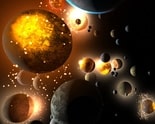
In Universe Sandbox 2 you start with a blank, mostly empty view of space, which matters more than it sounds, because everything that happens afterward is a direct result of what you place into that emptiness. There’s no script telling you what to build and no failure state waiting to punish a bad decision. You add a planet, drag a sun into position, and watch what your own arrangement does to itself over time.
| Genre | Physics sandbox |
| Core Mechanic | Real-time orbital manipulation |
| Objective | Open-ended experimentation, no fixed win condition |
| Key Actions | Building solar systems, moving planets, triggering collisions |
The starting point for most sessions is construction rather than destruction. You place a sun, add a handful of planets around it, and adjust their distance until the orbits look roughly stable. Getting the initial setup wrong is usually what causes the more chaotic results later, whether intended or not.
Players who enjoy building spend a long time nudging a single planet’s distance from its sun to see how the orbit shape changes. Early experiments focus on one clean, circular orbit; adding a second planet at a different distance introduces enough gravitational pull to make the system noticeably less predictable.
Once a system feels stable, the next instinct is simply grabbing a planet and moving it. Push Earth closer to its sun and the orbit tightens; pull it farther out and the orbital period stretches, all in real time. Moving one planet in a multi-planet system doesn’t just affect that planet, since everything is gravitationally tied together, and a small nudge to an inner orbit can send an outer planet drifting off course. Realistic-orbit purists make small, careful adjustments and watch closely, treating the sandbox like a puzzle, while other players skip that caution and go straight for dramatic repositioning to see what breaks.
Adding extra suns or planets into an already-stable system is the fastest way to trigger a collision, and it’s a popular thing to try once comfortable with the controls. Two suns in the same region fight for gravitational dominance over nearby planets, and the instability often ends in impact rather than a settled orbit.
Watching a collision play out is where the destruction-focused player type gets the most satisfaction, dragging a second sun into an existing system and watching planets get flung outward or pulled into collision. A simple sequence for a deliberate collision looks like this:
Depending on how close together you place the objects, a full collision can take anywhere from a few seconds to several real-time minutes.
One understated aspect of Universe Sandbox 2 is the patience it rewards. Some outcomes, like a slow drift that eventually pulls a planet out of its system, don’t happen instantly; they unfold gradually while the simulation keeps running.
This is also where the open-ended design sparks debate. Some find the lack of a fixed objective liberating, while others feel it’s hard to know what to try next once the novelty wears off. Players who stick with it become their own source of goals, setting up scenarios to see whether their prediction holds up.
No. There’s no scripted objective or win condition. Sessions are driven by self-imposed experiments, like getting two suns to orbit each other stably or seeing how many planets one sun can hold before its system falls apart.
Moving a planet close enough to its sun tightens its orbit dramatically. If the distance becomes small enough, the result is a direct collision instead of a stable path.
Yes. Introducing a second sun into a system with stable orbits often disrupts the gravitational balance, sending planets into new orbits, flinging them out of the system, or pulling them into a collision with one of the suns.
Universe Sandbox 2 doesn’t tell you what success looks like, and that’s the point. Whether you spend a session tuning a single planet’s orbit around its sun or skip straight to slamming two suns together to watch the fallout, the sandbox responds to whatever you throw at it in real time, and that immediate cause-and-effect is what keeps people coming back to build one more solar system.