BEST GAMES

Gacha Heat
Fireboy and Watergirl: Elements

Among Us Gacha Heat

Pocket Chibi – Anime Dress Up
ANIME GAMES

Gacha Heat Mod

Plants vs. Zombies 3

Toca Life World

Moto X3M Bike Race






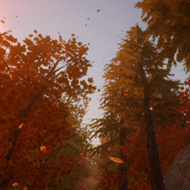
The One Behind You looks like a slow walk through overgrown woods at night, but it plays like a constant negotiation with your own nerve, because the moment you glance the wrong way, something tall and silent might already be closer than before. There’s no weapon, no health bar, and no way to fight back against whatever is following you. The whole game is built around one question: keep collecting, or run?
| Genre | Stalker-horror collect-and-avoid |
| Setting | A dark wooded area at night |
| Core Threat | A tall, silent stalking figure |
| Objective | Collect scattered objects while avoiding detection |
| Combat | None available |
The core loop is deceptively simple: explore the dark area, find scattered objects, and bring your attention back to your surroundings the moment you sense you’re not alone. Each object nudges you closer to finishing the run, but every trip away from safe ground raises the odds of crossing paths with the figure stalking the area.
Players fall into a rhythm quickly. A cautious explorer type circles wide around open areas, checking corners before committing to a dash toward the next object, while a more impulsive player sprints directly toward whatever’s visible. The loop typically resets once you’ve gathered a handful of objects, often somewhere around six to eight depending on the layout, and that unpredictability keeps repeat playthroughs from feeling identical.
What separates this from a jump-scare gimmick is how consistently line of sight matters. Looking directly at the figure, even briefly, tends to change its behavior compared to leaving it out of your view, as plenty of players have learned the hard way.
This creates tension around your flashlight: illuminating an area helps you find objects faster, but it also means you’re more likely to spot the figure before it wants you to. Sound-cue listeners play with their light dimmed lower than average, relying on ambient noise instead of sight alone.
There isn’t a foolproof method here. Even players who’ve memorized the general rhythm still get caught off guard occasionally, and that inconsistency is one of the more debated aspects of the design.
Once you’re spotted, the pacing changes. The slow collecting rhythm gives way to a sprint, and pattern-memorizer players who’ve mapped the layout have a real advantage over players improvising their escape.
A rough sequence for a spotted encounter tends to look like this:
Panic-runner types often skip step three, diving back into collecting the instant they think they’re clear, which occasionally backfires when the figure hasn’t actually lost interest.
Because the layout and object placement shift between attempts, memorizing a single perfect route doesn’t translate as cleanly as it would in a static level design. Repeat players end up learning general habits instead of exact paths, which some find more replayable and others find less satisfying to master.
That tension between wanting a masterable system and a semi-randomized one is probably the most common complaint attached to the game, and it doesn’t really have a clean answer since removing the randomness would strip out a lot of the tension too.
The One Behind You doesn’t need elaborate mechanics to be tense; it just needs you to keep glancing over your shoulder while you’re reaching for one more object. That gap between the quiet act of collecting and the sudden panic of being spotted is where the whole game lives, and it’s exactly why so many players describe finishing a run less as relief and more as getting away with something.