Lines To Fill looks like a plain grid of dots waiting for a bored five-minute distraction, but it plays like a spatial planning puzzle that punishes anyone who draws the first line that comes to mind. Every board is the same quiet arrangement of empty cells and starting points, and every board quietly demands you think two or three moves ahead before committing.
| Genre |
Logic Puzzle |
| Platform |
Browser |
| Core Task |
Draw lines to fill every empty space on the grid |
| Session Length |
Under a minute per grid, longer at higher sizes |
| Controls |
Click or tap and drag |
Reading a Grid Before You Draw a Single Line
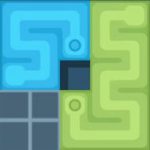
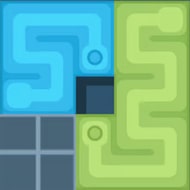
Completing a level in Lines To Fill means connecting lines from the given starting points until every empty cell is covered, with no gaps left and no line crossing one it shouldn’t. The trap most new players fall into is dragging a line toward the nearest open space instead of checking whether that space is the only route left for a different starting point.
A grid that looks half solved can already be unsolvable, because one early line closed off the only path a later cell needed. Scan corners and dead ends before your first move, since those tight spots usually decide the run.
Casual players who treat each grid as a quick tap-and-drag exercise tend to hit the same wall over and over until the scanning habit finally sticks.
Where Lines To Fill Actually Gets Difficult
The game opens on a 4×4 grid that most people clear without much thought, then ramps up steadily to 5×5, then 6×6, then 7×7 boards where a single misplaced line can lock up half the remaining space. The jump in difficulty isn’t about faster reflexes, it’s about the number of possible line paths growing with every added row and column.
By the time a 6×6 grid shows up, the number of starting points sharing one tight corridor is high enough that guessing stops working. Players who enjoy pattern-matching puzzles describe this stretch as where the game stops being filler and starts being genuinely absorbing.
What Happens When Lines To Fill Runs Out of Moves
A dead-end grid is what you get when every remaining starting point only has one possible direction left, and none of them actually reach an empty cell without crossing another line. Lines To Fill doesn’t punish this with a harsh penalty screen; it simply leaves the board incomplete until you undo a move.
The undo option lets you back out of a line placed too early, usually the fix once a corner becomes impossible to reach. Careful players use it the moment a grid looks cramped rather than waiting until fully stuck.
Diagonal connections appear on the larger boards and open extra routes through cells that would otherwise be dead ends, which is why 7×7 grids feel less rigid than their size suggests once you start using them deliberately.
What keeps Lines To Fill worth returning to isn’t the dots or the color scheme, it’s that moment on a 7×7 board when the last line clicks into an opening you almost dismissed earlier.