BEST GAMES

Gacha Heat
Fireboy and Watergirl: Elements

Among Us Gacha Heat

Pocket Chibi – Anime Dress Up
ANIME GAMES
Gacha Heat Mod

Plants vs. Zombies 3

Toca Life World

Moto X3M Bike Race






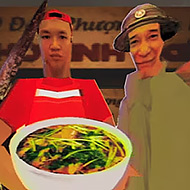
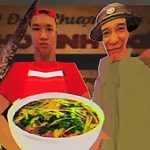
The order queue in Brother Hai’s Pho Restaurant does not work the way most people expect walking in. New arrivals don’t simply wait in a line; each one carries its own countdown, and letting the wrong customer sit too long costs more than a single missed order. The game is built around that pressure, turning a simple serve-and-collect loop into something closer to triage than cooking.
Every customer who walks in places an order almost immediately, and a visible timer starts ticking before you’ve had a chance to look at what they asked for. Early on, the timers are generous enough that a slow, careful approach works fine, but the number of simultaneous customers ramps up faster than most players expect.
A common question is how to keep up once three or four customers are waiting at once. You can’t serve everyone at full speed forever; the trick is prioritizing whichever order is closest to timing out rather than working in arrival order. That single habit adjustment matters more than any upgrade you can buy.
The serving counter is where finished dishes get handed off, and it only holds so many completed orders before it backs up. Watching that counter as closely as the customer timers is something new players overlook.
Money earned from successful orders funnels into a small set of upgrades that either speed up preparation or extend how long customers are willing to wait. Neither type is objectively better, and which one you should prioritize depends on how you play.
Players who like to juggle a full restaurant favor preparation speed, since it lets them clear dishes fast enough that patience upgrades barely matter. Cautious players lean toward extending customer patience instead, buying themselves breathing room rather than raw speed, and which approach nets a better outcome depends on how chaotic your run gets.
Once a customer’s timer runs out in Brother Hai’s Pho Restaurant, you don’t just lose that single order. The failed customer tends to sour the mood of whoever is standing nearby, subtly speeding up neighboring timers and making an already difficult stretch noticeably worse.
This cascading effect is one of the more debated design choices among players. Some see it as a smart way to punish poor prioritization; others feel it snowballs too aggressively, turning one small mistake into a run-ending spiral.
Brother Hai’s Pho Restaurant rewards the kind of constant, low-level attention that a lot of casual games ask for but don’t actually enforce, and that serving counter backing up while three timers run down at once is usually the moment new players realize the pace is faster than it first looked. Once you’ve internalized the priority-over-order-of-arrival habit, the whole loop clicks into place, and it’s genuinely satisfying to watch a run go from chaotic to controlled.