What happens when your partner drops mid-level in Baby Dino Adventures and you suddenly have to steer both dinosaurs yourself, with the exit door still three rooms away and a fresh pack of monsters in the way? That’s the exact moment the cooperative puzzle-platforming stops feeling relaxing and starts testing how well you can split your attention.
| Genre |
Cooperative puzzle-platformer |
| Platform |
Browser |
| Players |
Single player or two-player local co-op |
| Core Goal |
Reach the exit door together while collecting Dino coins |
Switching Between Dinosaurs in Baby Dino Adventures
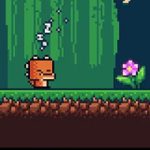
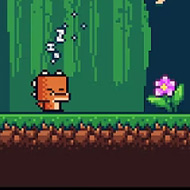
The whole game is built around controlling two dinosaurs, hopping between them rather than picking a favorite. One dinosaur might break a cracked wall while the other pulls a switch across the room, and a puzzle only clicks once you’ve cycled control back and forth. Arrow keys handle movement and jumping, an attack button clears monsters, and a transform button turns your current dinosaur into a bulkier, stronger form for a short stretch.
Playing solo means juggling both dinosaurs while monsters keep moving regardless, which is noticeably harder than having a second person on the other dinosaur. Burn the transform early on an easy monster and you’ll have nothing left when a tougher patrol shows up two screens later. A player who prefers going it alone leans on the transform far more aggressively, since bulking up compensates for one set of hands steering both dinosaurs at once.
Collecting Dino Coins Without Waking the Monsters
Every level scatters Dino coins across rooms, some tucked in spots that need both dinosaurs working together to reach. Grabbing every coin isn’t required to reach the exit door, but skipping them tends to leave a level feeling unfinished, and plenty of players replay early rooms just to mop up what they missed.
A lot of coin placements sit next to a sleeping or patrolling monster, so grabbing one cleanly means timing your approach around the patrol instead of walking straight over. Early rooms are forgiving, but once monster density picks up, a rushed coin grab is a common way to trigger a fight you weren’t ready for. A completionist-minded player treats every Dino coin as mandatory, replaying rooms until the tally reads full.
Playing Baby Dino Adventures Solo Versus With a Partner
Solo play means constantly shifting attention between two dinosaurs, and the game doesn’t slow its monster patrols to compensate. Two-player local co-op splits that load in half, with one person on arrow keys and the other on a separate control set, turning what felt like a juggling act into a straightforward division of labor.
That difficulty gap is genuinely divisive. Some players enjoy soloing every level and treat it as the intended way to play, while others consider it unfair and stick to two-person runs. Here’s roughly how a two-player run tends to divide the workload:
- One player scouts ahead and clears monsters with the attack button while the other collects Dino coins
- Both players regroup at switch puzzles needing simultaneous input from each dinosaur
- Whoever is closer to a monster patrol handles the transform timing for that section
- Both dinosaurs meet at the exit door once the room is fully cleared
Reaching the Exit Door Before the Room Turns Against You
Every level ends the same way: both dinosaurs need to reach the exit door together, not just one of them. That sounds simple until you’re three rooms in and realize your dinosaurs got separated by a puzzle gate a few screens back, forcing a partial backtrack.
Later levels stack monster encounters closer to the exit door, punishing players who save their fighting for the end instead of clearing threats as they go. It trips up players who treat the early levels as a template for the rest of the game. A player racing for the credits will ignore stray Dino coins and beeline for the exit door the moment it’s in view.
- Can Baby Dino Adventures be finished by one person? Yes, every level can be completed solo, though you’ll be switching between both dinosaurs yourself and the monster patrols don’t ease up to compensate.
- What does the transform ability actually change? It turns your current dinosaur into a bulkier, more powerful form for a limited stretch, letting it push through monsters and obstacles a normal-sized dinosaur can’t handle cleanly.
- Do I need to collect every Dino coin to finish a level? No, reaching the exit door with both dinosaurs is the only real requirement, though missing coins usually means backtracking later for a fuller clear.
Baby Dino Adventures ends up being less about raw platforming skill and more about coordination, whether that’s with a second player or your own ability to keep two dinosaurs’ priorities straight while a monster patrol closes in on the exit door.